Episode Transcript
[00:00:01] Speaker A: The best insight, instant feedback, accountability the all new Talk Radio Freedom 106.5 Good
[00:00:08] Speaker B: morning and welcome back to Freedom 106.5 FM on the line with me this morning. As promised, we have retired. Let me just give you that in an accolades we have retired Lieutenant Roman Dindial.
Good morning to you, Norman. I missed you yesterday. Hello, good morning.
[00:00:28] Speaker C: Hello, good morning. How about that now?
[00:00:30] Speaker B: All right, I'm getting you now. Good morning to you. How are you?
[00:00:33] Speaker C: Good morning, sir. Right, thank you.
[00:00:35] Speaker B: I mean we missed each other by a hairpin yesterday but we are here this morning and you know, we don't have much time so let's quickly get into our discussions as it relates to some of the things unfolding with the state of emergency currently overshadowing Trinidad and Tobago. First and foremost, to start things off, I want to ask you how effective in your professional capacity do you think the SOE is and whether or not it's actually working?
[00:01:05] Speaker C: So I've commented on this a lot before and as my professional capacity I would tell you and I have to reiterate, the SOE is not working.
We have an SOV that is a failed soe. So you have things that have not been used in this SOE that the SOS is not supported, supposed to be something to be used as a recurring decimal.
It is the last bastion that a state or any government would like to use in order to curb a certain situation that you can't get a hold of and you put things in place that are hard hitting and that's why you give the military extraordinary powers and also to help the state and you bring those things back to normalcy as quick as you can and then hand it back over to the law enforcement, normal law enforcement, your policing. Because when you go to a state of emergency, you have already told the public, you have told the world, listen, the normal things that you have going in Trinidad and Tobago, the normal policy powers that you have, it's not working. It's not handling the crime situation. So that's why you need these extraordinary powers. But you can't be using extraordinary powers all the time.
And you have seen this with one of the the articles by the IHCR that they are cribbing countries like Belize, Jamaica and Trinidad and tobago for using SOEs over and over. And they are, they are actually because limiting the human rights, human rights for the people of a country. So you're limiting that and so states can't be doing that all the way. So it shows you that you are failing in doing in actually utilizing an SOE to bring about the change that you think that you can. Now we have other individuals who will argue that, listen, the numbers and the figures are going down. And I will propose this to those individuals. Just like when we had another commissioner of police that was working during a pandemic and we said that, you know, because his numbers went down because of the pandemic. You can use the same argument because you have those, those, those restrictions, those sorts of things that you have. The numbers are going down, but what you are actually seeing right now, the numbers are going back up. We have these brazen murders that are taking place during the daylight where you have the criminal elements that are no longer afraid or no longer said like this SOE has a punch, so they are moving with impunity. So they recognize that the state has failed. They recognize that the police themselves were not able to do their job normally. They recognize that the police are still not able to do their job with the extraordinary powers that they have. So they're coming out and the police always would not be able to get evidence to charge individuals to solve murders, to solve crimes. So we're seeing it still happening again. And we're in a problem right now where the criminal elements are recognized and they have got immune to it. State of emergency is a failed state of emergency.
[00:04:07] Speaker B: We have former police Service commission Clive Dutton, Pastor Clive Dutton, saying why the fear of crime and violence in some communities is a major concern.
The decline in the murder toll should not be dismissed.
With that being said, he made a statement. He said, imagine if we didn't have a state of emergency, the murder rate might have skyrocketed beyond what we are and beyond where we will last year.
Do you believe that statement to be true and factual?
[00:04:45] Speaker C: So, so, so I will tell Mr. Mr. Dutton, if the thing is that we are not. We're not debating figures and numbers and statistics. If you have one murder too much. One. One murder more, right, it is too much because you hold. The whole thing about the state of imagining was to stop that.
It wasn't to bring it down. You know, you have reached up because in every country you have, you have crime, you have crime and you have things that going on, but the police service was not doing their job. So actually saying that you're trying to have a state of emergency to bring this down and you're using figures is disingenuous because what you really need to do, you really need was just to stop crime and you're seeing it's not working. So you're telling me that it's going down, but you're seeing more and more violent crime happening.
So in other words, Mr. Dutting is saying that he would like to live in a perpetual state of emergency. That can't happen. You cannot be taking away citizens rights. Right, your human rights, your democratic right, your rights. People don't understand, a lot of people don't understand what a state emergency is because they find it because the state of emergency has not been, as I said, we don't have a curfew, we don't have certain sort of restrictions and the criminals themselves recognize that. However, the underlying thing about the state of emergency is what we're going to go to the crux of the matter where a political entity, the minister can sign a pdo, a preventative detention order for any person.
You and I have no rights in the state of emergency. You know, they can come into your house, they could come into your without a search warrant, just on suspicion. And they can keep hundreds of citizens under investigation detention order, taking away their rights to liberty and freedom under a preventative detention order. And this is where it's going. So people and citizens see until it starts to hit home, until it affects these individuals themselves, then they will understand the amount of freedoms they have actually given up by having this state of emergency and this order put in place. And it's not doing anything.
[00:06:48] Speaker B: How long can a government continue to treat with a state of emergency like a recurring decimal as you mentioned a few moments ago and extended and extended Constitutionally, when does it end and how much of how much time or leeway if you do know when it ends before they can actually go back to parliament to reinstate another one.
[00:07:08] Speaker C: Well as you see that's, that's all there, that's open source information that you know. And then as you recognize you have to go back to parliament after the 30 days. So what has happened is that the constitutionally we have that those limits in our, in our constitution where you proclaim it, you have your first 16 days and then after that you go back simple majority and then you, when you extend it into two days. But that's the loophole the government now in Tobago is exploiting where once you break the state of emergency and you break it within you give, you give them two weeks, then you can go back again and declare another state emergency. So they're framing it, they're using the loopholes within the laws of Trinidad and Tobago to do things that you're not supposed to do. It wasn't done like that in the essence of the law, the reason our lawmakers and our constitutional guardians and constitutions at the end when they did this law, they knew the essence of the law and they knew exactly how a state of emergency would affect the individuals in Trinidad Tobago and affects the citizens. That is why they put it for a specific short amount of time. You're supposed to be able to return the country back into a state of normalcy when you go to a state of emergency in a very short amount of time. But the loophole polls that are in the law is what the government is using right now and going back, breaking it and then going back. So you have things in, in, in, in our constitution in law that are bad laws. And you do have the law, she sit in Trinidad right now coming and say, you know, listen, the citizens should not be critical or overly critical and they need to be responsible when they're criticizing the, the, the law association of criticizing the appellates. And now nobody's criticizing the judges themselves. You know, nobody's criticizing each individual job. What people need to criticize, what people need to speak up about is the judgments that are made. And these are the things that have citizens or keep citizens their rights. Because you are the ones who will be able to speak out of bad laws. You know that bad laws are made. And while society evolves, these are the kind of pressures that allow us to change the laws in parliament and have bad laws amended into good laws. Because the law is the law doesn't mean that it's necessarily right. You know, and we have seen that way, way back in history where we have had laws, we still have archaic laws on our books, we still have bicycle laws. That is colonial. We have sedition laws, we have laws riding a bicycle.
If you don't have a license, they could charge you. And we have laws that. Speaking of. And these are all colonial laws that we are adopted from our colonial masters in order to keep us oppressed.
[00:09:46] Speaker D: Respectfully. I think your guess making no sense at all. If your guest is saying that one winner is too much and the statistics show that we have 260 something less murders than last year, how can you not say that that is an improvement regardless of the method used? Maybe the SOE is not the best method in the world. Maybe it's not the only solution we can look at. Maybe we have to look at other things.
But until you find a solution, if this is bringing down the murder rate, then it works. Why change it?
[00:10:18] Speaker C: You're missing the point, sir.
[00:10:19] Speaker E: Right.
[00:10:19] Speaker C: The soa, the SO is Not to bring down murders. You're supposed to see what the SV is supposed to be able to get. They're talking about as SOE is is something that you give extradition powers as it was for murders. You know if you understand why the government could place the sue to because murders and stuff is doing normal law enforcement. When you have law enforcement and can do their job normally that's what you have the police for. When you understand you're going to so you're going to sec for terrorism. You understand when that when. When you had the minister saying that they're looking for murders for high ranking officials, plots against the state. Those are the things that SV is for. If you figure that the SV is for murders then you living in the wrong place. You need to want to live somewhere where you want to live in a perpetual SVC that's in Chen out of you.
[00:11:04] Speaker B: Hello, Good morning. Respectful.
[00:11:06] Speaker F: Whose freedom of speech have they taken away?
[00:11:08] Speaker E: Sir? Whose freedom of movement have they taken away?
[00:11:11] Speaker F: Not those who pray in the fool.
You still have your. You can still go to church, you can still go to school, you can still go grocery. So what is your problem? I support a further state of emergency again.
[00:11:23] Speaker B: All right. The thing about it is I was getting to that point and that caller raised the issue we talking about suspension of rights. You mentioned that unless it reach home we wouldn't understand how our rights have been infringed upon based on the intel, based on investigation, based on what we're seeing in the public's domain, we can't see nothing hidden. They are claiming that there is intelligence where persons have gathered themselves together and they have conspired against officials, high ranking officials and other persons in order to disrupt the peace of law abiding citizens. So to prevent these and they say they have gathered intelligence as such.
Now the PDOs is just that to prevent you from carrying out an activity.
My thing about we do not have sufficient evidence to take you before the courts with a charge of conspiracy because you have not conspired. You have uttered statements on social media, you have laid threats.
You have also called on the attention of external individuals and pointed as to where they should launch attacks.
And you have been held. There were two persons actually charged and you know, released and faced convictions and stuff. But there were others currently being held on PDOs off of alleged intel of conspiracy. Have this government opened up a Pandora's box for that? If and when this state of emergency does come to an end, for the 33 days these said individuals can now take the state to task and then cost tax mayors hundreds of thousands of dollars, even in the millions to pay for unlawful detention. Are these PDOs something lawful in the sense that there's no retribution to come, or they hold you now and they could face the consequences before the courts later on in the end?
[00:13:13] Speaker C: Well, you have seen that is happening. We are still waiting on the 2011 judgment, which is the. Which is going to happen soon. Of that last state of emergency.
We have individuals that have won their case already and they're waiting on how much damages they're going to receive. You also had one of them actually was, I think, if my memory is right, on one of the articles, one of them was a very senior police officer that was held on a PDO without being charged.
The newspapers took the article and he and a lot of individuals, they won that case. And the state has to pay his lawyers fees and the state has to pay for recompensation, for loss of earnings and character and all of that. So we're waiting on the others that had happened in 2011 and we're seeing what the judgment is and the precedents will be set. So obviously, once the case law has been set and the presidents has been set, definitely the other individuals right now who are being held right now will, as we say in local parlance, trump and follow suit. The sad thing about it is that the individuals that have signed these, these orders.
[00:14:20] Speaker B: Hold on.
[00:14:21] Speaker C: Will not be. Will not be. Will not. The fundings will not come from them.
[00:14:25] Speaker B: Exactly.
[00:14:27] Speaker C: It will come from.
[00:14:30] Speaker E: Thank your guest.
I want to say that he has hit the nail right on the head.
And I just want to say that that's all.
[00:14:43] Speaker B: He had the nail on the head. The thing about it is we can dialogue all day on this soe and whether or not it's bringing or bearing any fruits at all with respect to what it's doing, telling me that you have seven murders less than last year. Does that state that the SOE is actually working?
[00:15:02] Speaker D: Working.
[00:15:03] Speaker B: Hello, good morning.
[00:15:04] Speaker E: Good morning, Daisy, quickly, you know, I'm hearing that the faa, because it's breaking down the moderator, it's working and should be kept, but Sharia law will bring it down much more. Should we then go with that? And then we have the issue of the bail bill. Now, the bail bill would have kept some of these people in prison according to law, but it was denied because the current prime minister was saying it was denying people their rights.
But how much more rights are being denied? No, no, you can't even protest 500 meters away from certain places.
And then we are now on the international scene with respect to using this state of emergency for what it's not supposed to be used for. And before I go, I want to ask one question of your guest.
Pdo, sorry, and normal arrest. Why is it that some people are arrested and charged and some people for the same crime are put on PDOs? And why is it that PDOs detainees seem to have less rights than the normally arrested and in. In, well, arrested people.
[00:16:30] Speaker B: I. I realize there's a difference. Do you understand the difference?
Hello, Norman.
[00:16:38] Speaker C: Oh, you're asking me. I thought you was asking Nicole.
So. So, I mean, Nicole is quite correct. Nicole is quite correct. Recognizing and seeing what is happening. And we are on the. We are, as you. We are on the International Market Day global. Everybody's looking at us now. We're looking at Trinidad and Tobago, where Trinidad and Tobago is heading.
[00:16:57] Speaker B: We have.
[00:16:57] Speaker C: And that has happened even before that.
The eyes were looking at us, red flags were showing up where people are saying, you know, Trinidad Tobago is a vassal state. Especially when we came up, right, we came up with a narrative that we brought a radar into Trinidad and Tobago to help fight crime. We brought our radar because of the soe. We bring our radar to look for guns. And it was shown the radar cargo and Situ Mountain. The radar can't go and see nothing. The radar had everything to do with the attack in Venezuela and the kidnapping of Maduro. Whether you like him or not, we know that, and we helped the US in that. So we were seeing, everybody was seeing that Trinidad and Tobago is like a vassal state. We are doing everything that the Trump administration requires.
So you're seeing what is happening. We started way, way back, so we started with false narratives. You know, we started false narratives. You said, then you said, then you said the radar work. And then all of a sudden the radar gone. Are we still in an soe? So, you know, all these people trying to justify the SOE and justify it, and I'm kind of going all the way up from the top. The narrative to justify this S3, it just doesn't work. It just doesn't work. What you're supposed to be doing for this S3, you're supposed to be giving the police back their powers and allowing the police to do their jobs. Let the police to see. So you see, if you want to bring in people to help Trinidad and Tobago, where. Look, you look and you see where we are feeling, where we are feeling, where the police is feeling the Police is feeling in gathering evidence, the police is filling in and actually finding the people. So you need to know, this is where you need to bring in. So if we follow the Westminster style of governance and our, our judicial system follows that, our highest court is the Privy Council. We know, we use those guys across there to help us. So tell us, listen, this is what your investigative technique needs to be like. This is what your cold case scenarios need to be like. This is what you need to do in the judiciary. Unclog the judiciary, make sure you get the people to the courts. Why are you holding people? Let's just see. Let's assume for a second that they have, they have information because they don't have evidence to charge of these 400 plus people that they have under the preventative detention order, what are they doing is my taxpayers money and your taxpayers money. If these people are in fact guilty.
[00:19:14] Speaker D: Right.
[00:19:15] Speaker C: They are there by the state, they're not being charged, not being held accountable, they're not being, they're not paying for the crime. So in other words, they're there, they're there by the state holding them. They get an application, they're on aviation. And I'm just assuming if they are, if they are guilty. If they are guilty because after you're going to let them go, they haven't been.
[00:19:33] Speaker B: Is the type of vacation. I will, I don't mean to cut you, but that's one vacation I don't want. I'd work hard every day. You see that kind of vacation? No.
[00:19:41] Speaker C: Well, you, you have them there. But here's the thing, I don't have education also. But at the end of the day they got to be free. There is, there is, is there any for their crime.
You do the crime but you're not serving any time, you're not, you're not being punished. There's no, there's no penalty for doing so. You telling me that someone in Trinidad and Tobago could plot to murder or plot some conspiracy against high officials and you have all this intelligence apparatus for the whole state and you can't find any damage and put any evidence. But you could find, when a minister phone gone missing, you could find when somebody be ragged, when somebody be ragged stolen on the block, all of a sudden you could get. So you see, I'm not about administrations, you know, I'm about the people and the government and the institution doing what they're supposed to do. Because this sort of derelation of duty has crossed all administrations.
[00:20:44] Speaker B: And my final thought to you in conclusion, this soe in your respective learned opinion is not serving a good purpose. You mentioned certain apparatus of the SOE is missing. Could you just, within a minute tell me what are some of these things that governs an sue that you think the government did not employ?
[00:21:03] Speaker C: So I was involved in the essays because you know, I'm a retired officer.
I was involved in that first SOE 2011 under the then camera facade, administration and under that. So when, when the military was giving extraordinary powers in order to, so it works as a force multiplier. What it does, it gives it, it gives, when it gives the military a certain amount of police powers, like police they can't investigate. But what it is, it is as you said, to bring down that sort of, you know, the hammer.
You're coming, you're coming with force. You're coming to do something that disrupts the criminal elements and disrupts them in such a way that it dismantles them. That disruption has a dismantling effect throughout the organization. So one of the critical things and people may say, listen, here's what Mr. Did you know we're in SOEs, so and so. And it's not disrupting anybody because we have freedom. One of the things that is critical in an SOE is you see that freedom of movement, the curfew aspect is very, very critical and important because it's gives you that hard hitting. You curb the curb. You can now funnel them into certain areas. The elements that you're looking at, you're looking for and you go after them. But before you even reach the svc, you are supposed to have all the intelligence, right, all the information that you gathered and you place it into intelligent format. So when you go into, when you go into the se, you're doing targeted operations and you're doing those targeted operations that get those targeted groups.
I am hearing all the time that we know how many gangs it has. Then we hear the UK has one set of numbers, then we hear our minister saying a different set of numbers. So you don't know where it's going, you don't know where the information is. If the information is credible. We're moving back and forth. We're holding people in preventative detention orders and we're not seeing any sort of targeted operations that are taking place that are really supposed to re stabilize the country, bring the country back to where we need and we need to do it quickly. It's not about politics, it is about our institutions doing their job, doing their job properly and giving them the tools to do it. And they say they have the tools because we have the minister saying that he has all the intelligence gathering tools and he has it possibility, it is how you use it. So I just want to give, and I just want to give you one more. The tone of any institution is set by the leader. Set by the head. If you have a leader that doesn't know what he's doing right and you, anybody following what you expect, they're going to follow the people. They just follow the tone. So you have an institution. We are here, we are talking about national security, homeland security. If the leader doesn't know and needs help, people need to give him help or the Prime Minister herself needs to remove him.
[00:23:52] Speaker E: All right.
[00:23:52] Speaker C: And put some somebody competent to do the job.
[00:23:55] Speaker B: Sir, I would leave it there. I thank you very much, Norman Dindial, retired Colonel, for coming through.
I believe a part two is necessary and we would look into the not too distant future to bring you back. With that being said, have a safe and productive one and we'd look to future conversations with you. Have a good one, sir.
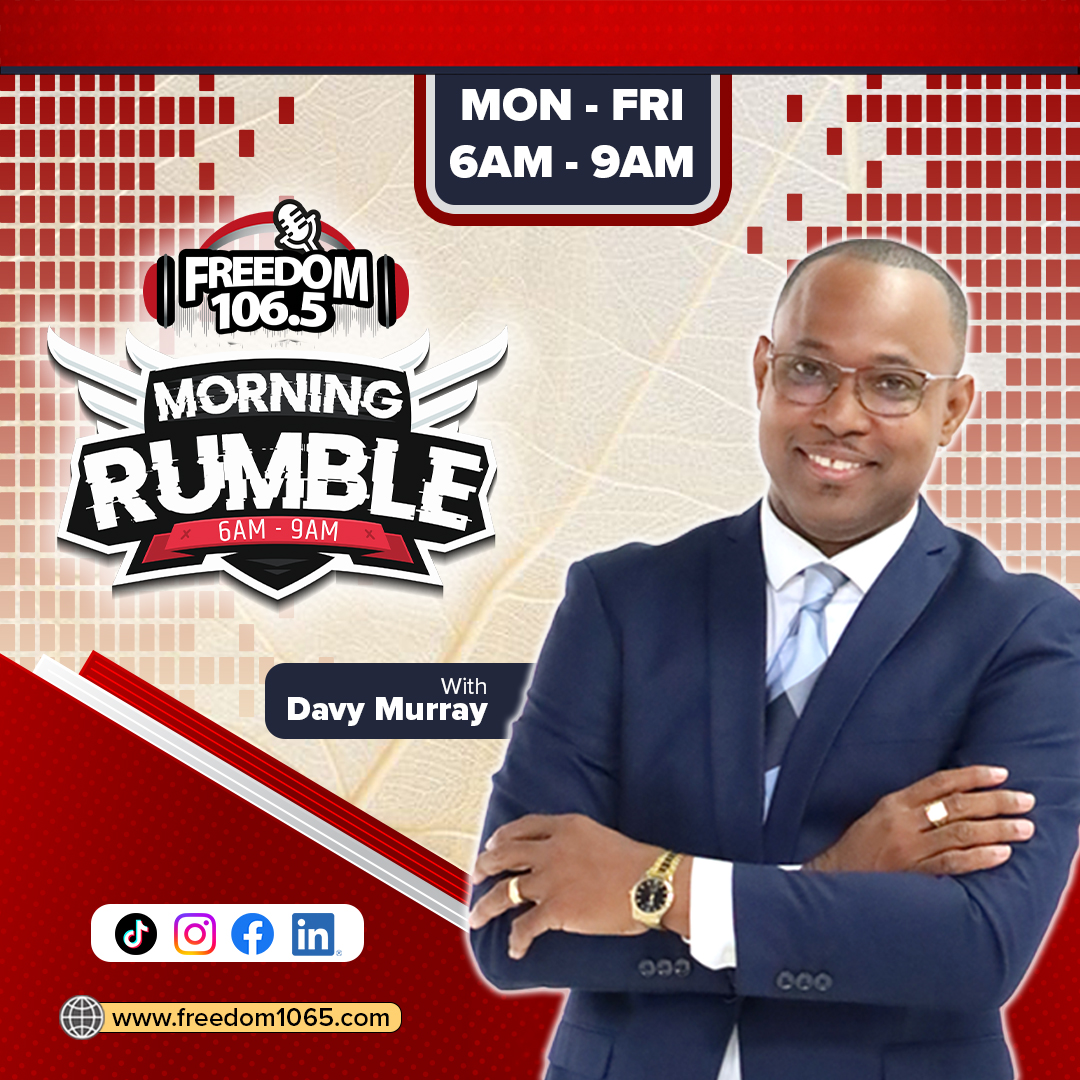
And that concludes the morning rumble.
[00:24:14] Speaker A: The best insight, instant feedback, accountability, the all new Talk Radio Freedom 106.5.